

Land
Land training builds against gravity. It uses external load, body weight, machines, bands, and progressive overload to challenge the muscles.

Science of Water
Combining Water and Land Training
Strength training does not have to live only on land. Land provides gravity, external resistance, and progressive overload. Water adds buoyancy, drag, hydrostatic pressure, turbulence, and an adaptable environment where effort can still be serious.
This article explores a working hypothesis shaped by published research, my 19th year of AquaFit Sports experience, and my own recovery journey.
Photo © Stuart Davidson
A Short Brief
When it comes to building strength, the gym is not your only option. Land-based strength work remains one of the most established ways to build muscle, progressively load tissue, and develop measurable strength. Water offers something different: a complementary environment where resistance, movement quality, conditioning, and recovery can work together.
The opportunity is not to choose one environment over the other, but to use each for what it does best.
For AquaFit Sports, the goal is not land versus water. The goal is using the right environment for the right training effect.
Land training builds against gravity. It uses external load, body weight, machines, bands, and progressive overload to challenge the muscles.
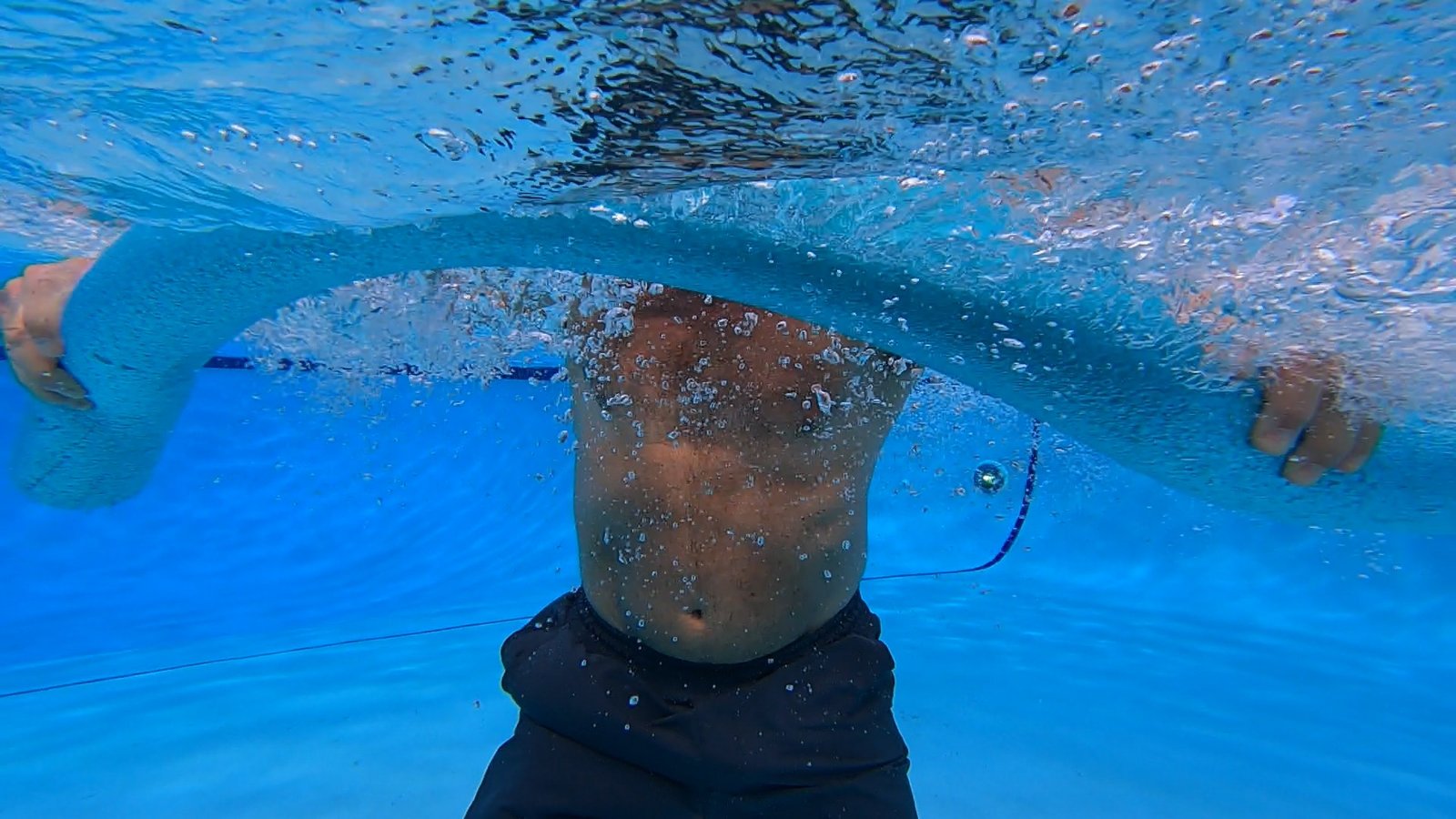
Photo © Stuart Davidson
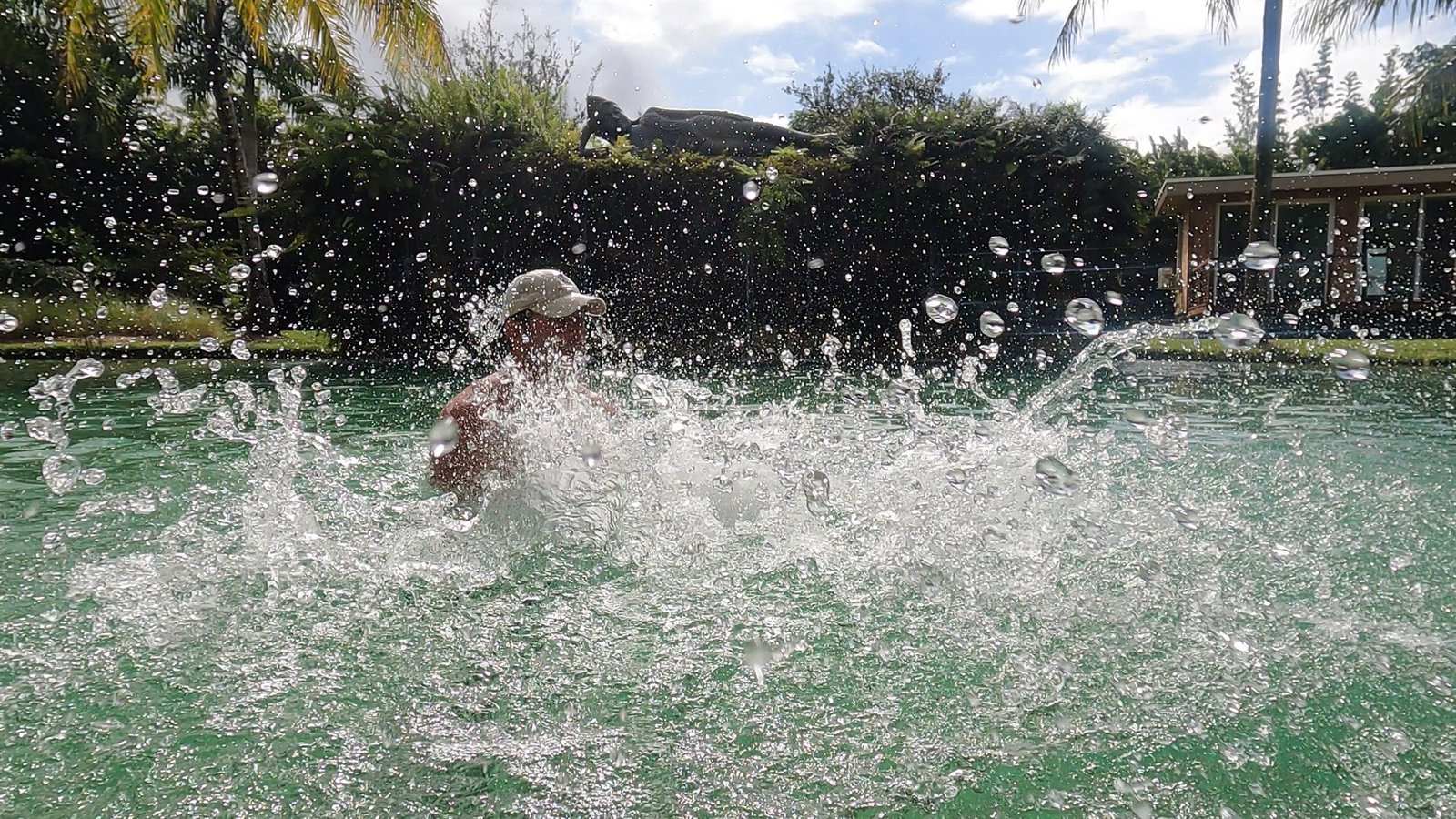
Water training works differently. Instead of relying only on gravity, water surrounds the body with resistance. Movement speed, surface area, direction, depth, turbulence, and control all influence how demanding an exercise becomes.
Land can develop maximal strength and progressive tolerance to external load. Water can support conditioning, reduced-impact resistance, movement control, active recovery, and training continuity between demanding land sessions.

Water’s drag resistance rises rapidly as movement speed increases. Move faster and the water pushes back harder, allowing intensity to create meaningful resistance without external weight.

Immersion applies constant external pressure to the body, supporting circulation and venous return. In AquaFit Sports field experience, the muscular pump often remains noticeable during a brief rest. When the next interval begins, the muscles can feel as though they are building upon the effort already accumulated.

Longer work intervals increase time under resistance and allow fatigue to accumulate. In oscillatory training, rapid, controlled changes of direction sustain muscular demand. Repeated intervals build upon that accumulated effort, creating the conditions for adaptation over time.
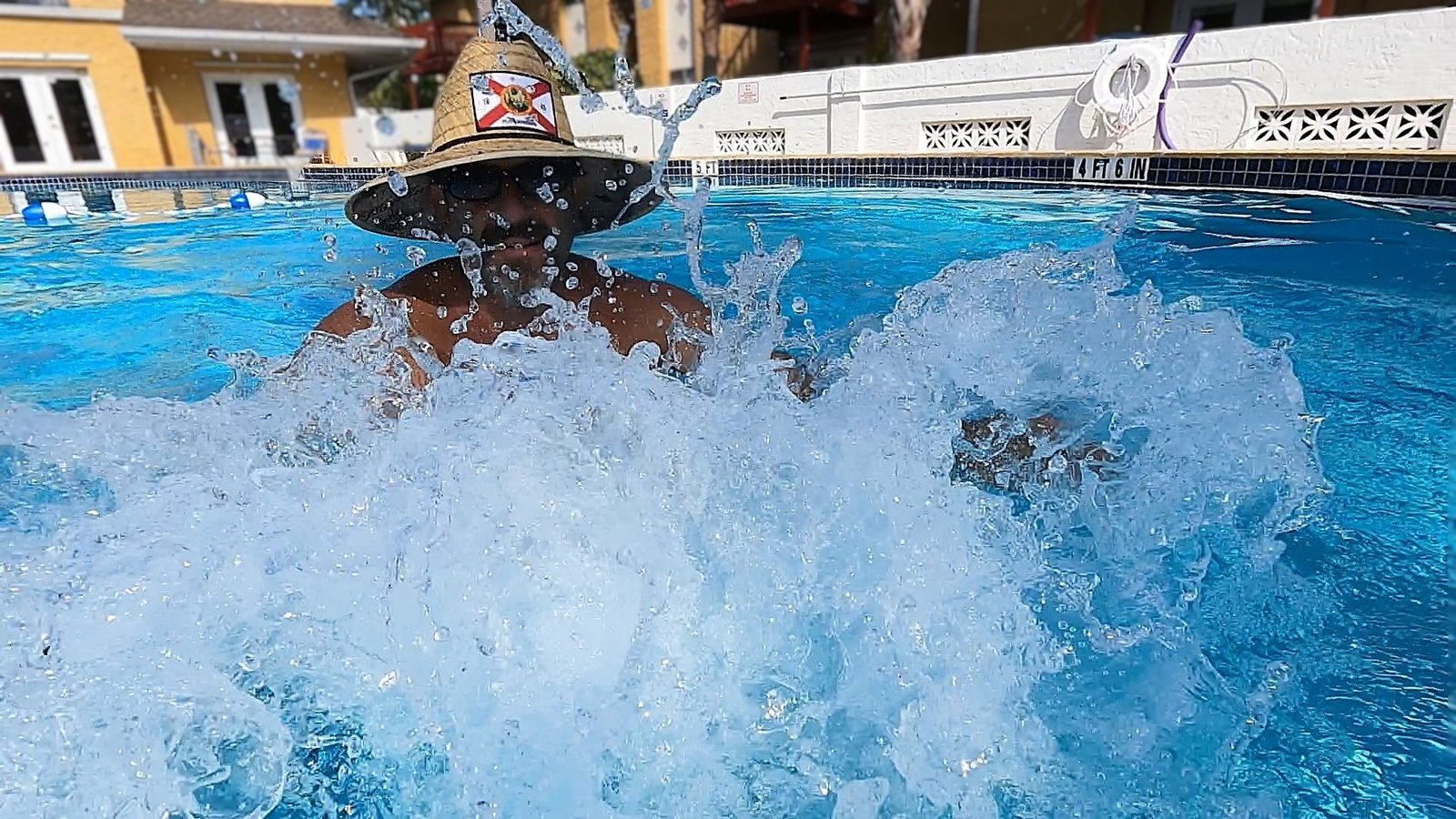
The bubbles,
turbulence, and
white water are
not visual noise.They are evidence
of force production.
Photo © Stuart Davidson
For AquaFit Sports
The research shows that water creates a unique environment for resistance training—one that influences how our bodies respond, adapt, and recover.
Here is how those findings translate to real-world training.

Buoyancy reduces impact while allowing you to train with greater range and less strain.

Active movement in water supports circulation, reduces stiffness, and promotes recovery.

Drag, turbulence, and multi-directional resistance create challenge without heavy external load.

Water offers a joint-friendly way to train regularly—even when land training is limited.

Speed, surface area, depth, and control adjust the effort to match your needs and goals.

Water training develops capacity, control, and endurance that transfer directly to land.
Field Note

For nearly two decades as an adaptive aquatic training specialist, I’ve seen the same pattern repeat:
When clients train intentionally in the water, they recover better, move with greater control, and stay consistent—so when they return to land, they’re able to push harder and progress faster.
The aquatic environment reduces unnecessary stress on the body while still providing powerful resistance, metabolic demand, and neuromuscular challenge.
It becomes a training ally—one that helps people build capacity, not just in the water, but for everything they do on land.
The greatest gains don’t come from one hard workout.
They come from being able to train again tomorrow.
That’s how we maximize gains—through consistency, intelligent training, and the right environment.
The question is no longer whether water can build strength. The better question is: When will you allow water to help you build strength more consistently?
Explore the application
See how water can complement strength, conditioning, recovery, and demanding land-based training.
Explore Sports PerformanceTwo peer-reviewed references support the principles discussed in this article.
View full referencesDavidson, Stuart. “Maximize Your Gains: Combining Water and Land Training.” Science of Water, AquaFit Sports.
aquafitsports.com/sow/maximize-your-gains.html